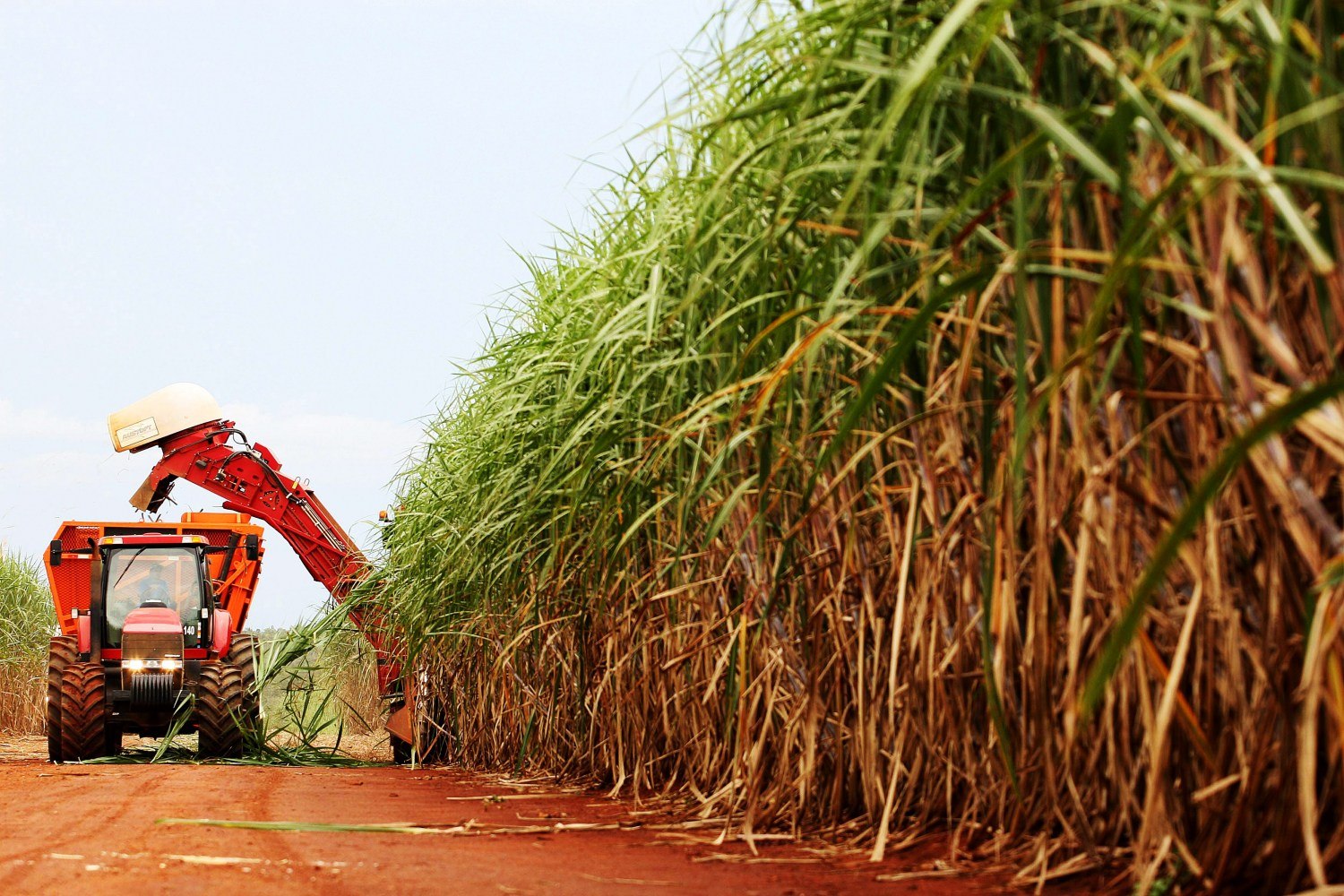
Sugarcane in São Paulo: biological fixation as the baseline across 8,000 ha
Case numbers
The challenge
A São Paulo mill with 8,000 hectares of sugarcane — owned and from suppliers — wanted to reduce production cost without compromising the longevity of the cane field. The sensitive point was the soil: years of intensive management had taken a toll on structure and biology, and every real saved on inputs could not come at the expense of the ratoon.
The solution
BioPulse designed a biological fixation program tailored to the mill's scale. Unlike a one-off application, the program was integrated into the operational calendar — from planting to ratoon — with associative and endophytic strains selected for grasses, response monitoring, and fine-tuning by plot.
Scale demanded what the BioPulse platform does best: batch-to-batch consistency. Across 8,000 hectares, product quality variation is not a detail — it is a loss. Every batch delivered held the same standard of viable cells.
Inside the program
The operational design combined Base Platform technologies with the mill's routine:
- associative and endophytic strains for grasses — Nitrospirillum, Azospirillum and Methylobacterium — colonizing root and stalk;
- positioning by cycle phase: application at planting and reapplication on the ratoon after harvest;
- batch-to-batch quality control, with a minimum viable-cell standard verified before each shipment;
- plot-by-plot monitored response, feeding the fine-tuning of rate and calendar every season.
The result
Biological fixation stopped being an experiment and became the baseline of management: applied by default, not by exception. The soil responded with better structure and biological activity, cost per hectare fell, and the mill's technical team — the most demanding audience — approved its continuation.
"The biological fixation program in sugarcane became the baseline. Better soil, lower cost, and the mill approved it." — Patrícia Lemos, Agronomist · São Paulo, Brazil
See the science of biological nitrogen fixation behind this program — and understand why living soil yields more.